
Selecting an LED downlight for a wholesale program or construction project involves more than choosing a wattage. The product must fit the ceiling, deliver the required light distribution, match the destination market and remain practical to install and maintain.
This guide gives importers, distributors, contractors and project buyers a clear checklist for comparing downlights before requesting samples or bulk pricing.
1. Start with the installation method
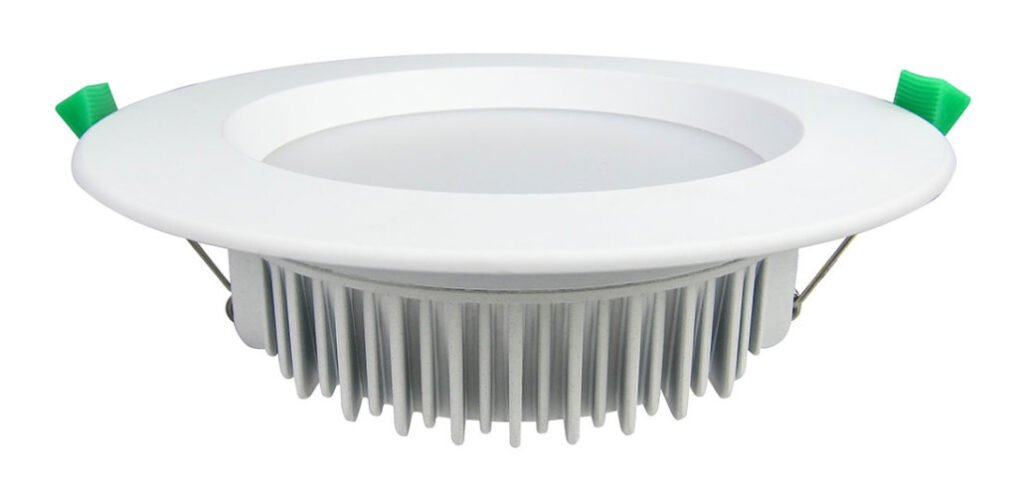
The installation environment determines the basic downlight structure. Recessed downlights sit inside a ceiling cutout and provide a clean appearance. Surface-mounted models are useful when ceiling depth is limited or when cutting the ceiling is not practical. Adjustable downlights allow the beam direction to be changed for retail displays, feature walls and hospitality applications. Waterproof versions may be required in damp locations, subject to the applicable installation standard.
When sending an inquiry, specify whether you need recessed, surface-mounted, adjustable or moisture-resistant products. You can review the main options on our LED Downlights page.
2. Confirm the cutout and overall dimensions
For recessed models, cutout size is one of the most important purchasing details. A product with the correct wattage may still be unsuitable if the ceiling opening does not match. For replacement projects, measure the existing cutout as well as the available ceiling depth. For new projects, confirm the preferred trim diameter and installation clearance with the contractor.
3. Compare light output, not wattage alone
Wattage describes electrical input, but buyers should also compare lumen output, efficacy, beam distribution and the installation height. A lower-wattage product with an efficient optical system may provide better useful illumination than a higher-wattage product with poor distribution.
For accurate selection, tell the supplier the room type, mounting height, target brightness and spacing between fittings. A lighting calculation may be appropriate for larger commercial projects.
4. Select color temperature and color quality
Common color temperature choices include warm white, neutral white and cool white. The preferred option depends on the market and application. Hospitality and residential spaces often use warmer light, while offices, retail areas and utility spaces may use neutral or cooler light.
Also confirm the required color rendering level, color consistency and whether multiple color temperatures should be available in one product range. If a selectable-CCT design is needed, state this before sample confirmation.
5. Check the beam angle and glare control
Wide beam angles are suitable for general illumination, while narrower beams are useful for highlighting products or architectural features. A recessed optical design can reduce direct glare, but the result also depends on installation height, spacing and room layout.
6. Review the driver and control requirements
Confirm the input voltage and frequency for the destination market. If dimming is required, specify the control method rather than simply requesting a “dimmable” driver. Also ask about power factor, flicker requirements, surge protection and driver placement where these points matter to the project.
7. Plan customization before production
For private-label and distribution programs, customization may include housing color, wattage, color temperature, logo, label, carton artwork and instruction materials. Packaging should be confirmed together with the product specification because carton size, protection and labeling affect export preparation.
SFY supports logo, specification and packaging discussions through its OEM & ODM service.
8. Approve samples and final specifications
A sample should be checked against the written specification before mass production. Review appearance, dimensions, installation fit, light color, function, driver information and packaging. The confirmed sample and specification sheet should become the reference for the order.
Information to include in your quotation request
- Downlight type and application
- Required wattage or target lumen output
- Cutout size and overall dimensions
- Input voltage and frequency
- Color temperature and color rendering requirements
- Beam angle and dimming method, if applicable
- IP or environmental requirements
- Estimated order quantity
- Logo, label and packaging requirements
- Destination country or market
Discuss your downlight requirements
Send SFY your target model, quantity and market requirements. Our sales team can recommend suitable options and prepare wholesale pricing without displaying fixed retail prices online.